
Focal Length controls the zoom and perspective. A lower number (8mm) creates a wide, distorted view, a higher number (50mm) zooms in and flattens the background.
Simplified: Think of this as zooming. It determines how wide of a scene the camera sees.
8mm & 14mm (Wide Angle): Zoomed out. Visual Effect: You see a huge amount of the environment. Objects close to the camera might look stretched or distorted.
35mm & 50mm (Standard/Portrait): Closer to how the human eye sees. Visual Effect: The view is tighter. 50mm is great for portraits as it doesn’t distort faces.
Camera: Sony Venice; Lens: Petzval; Aperture: f/4; Focal Length:
8mm
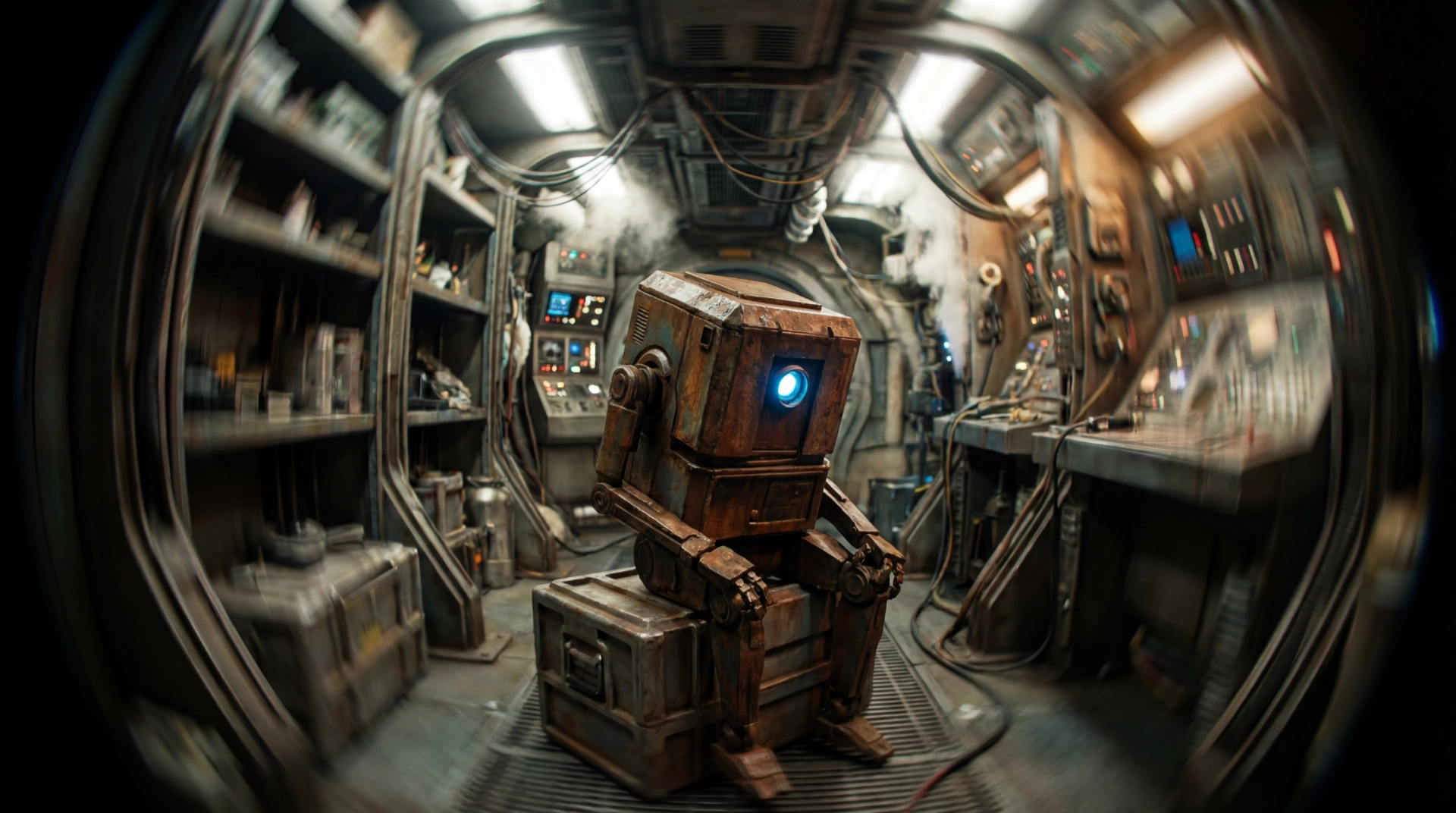
The Effect: The room feels like a massive, spherical tunnel. It makes the environment feel overwhelming and the robot feel trapped inside a “fishbowl.
Why it’s correct: Look at the outer edges of the image. The vertical pillars and pipes are not straight; they are curved like a banana. The corners are also dark (vignetting). This is textbook “barrel distortion.
14mm
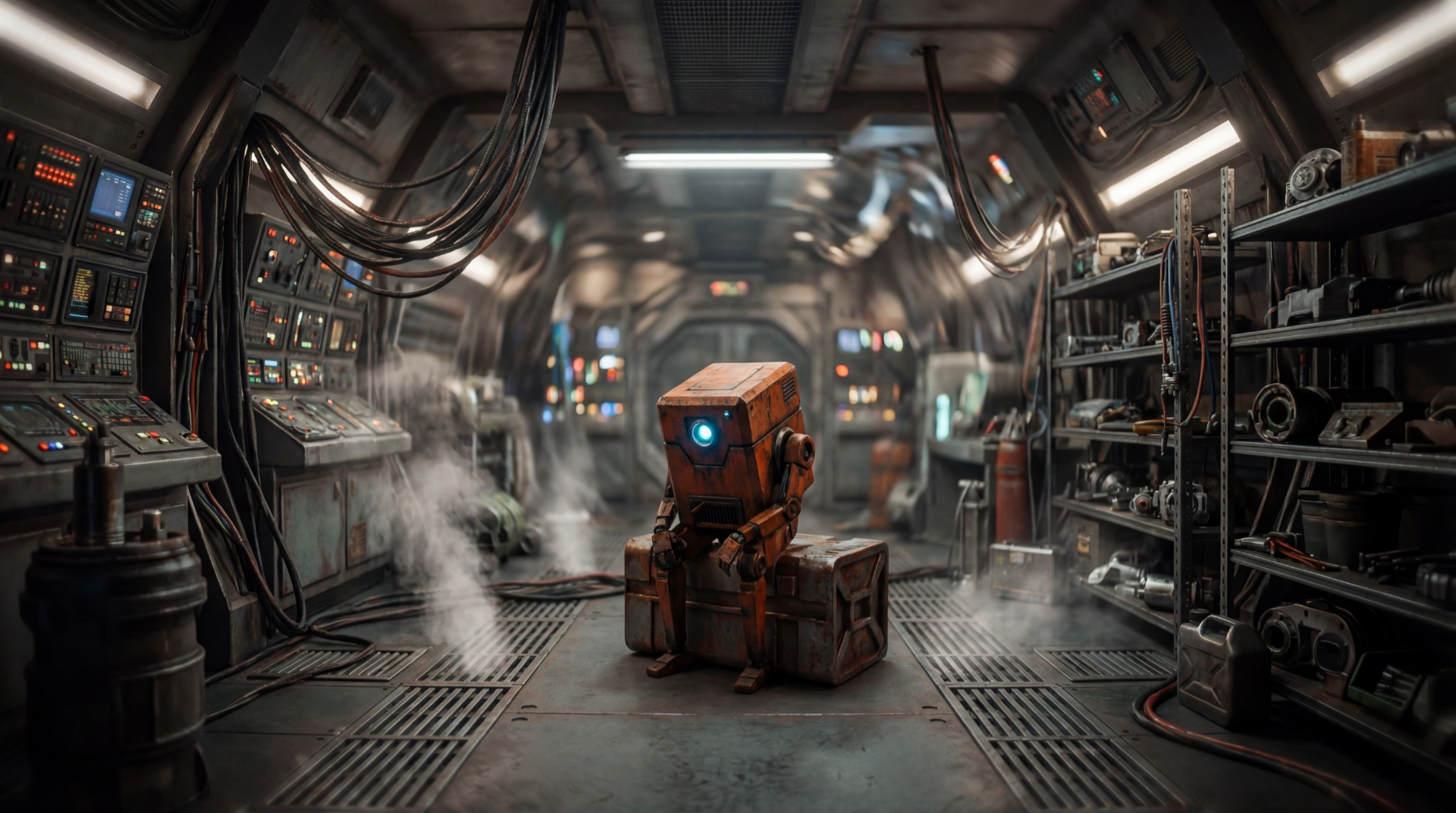
The Effect: This creates a sense of scale and depth. The robot feels small, and the workshop feels huge and spacious. A classic “high-budget sci-fi set” look.
Why it’s correct: Look at the floor grating. The lines on the floor lead your eye deep into the background, making the back door look very far away. The walls are straighter than the 8mm, but the perspective is still exaggerated.
35mm
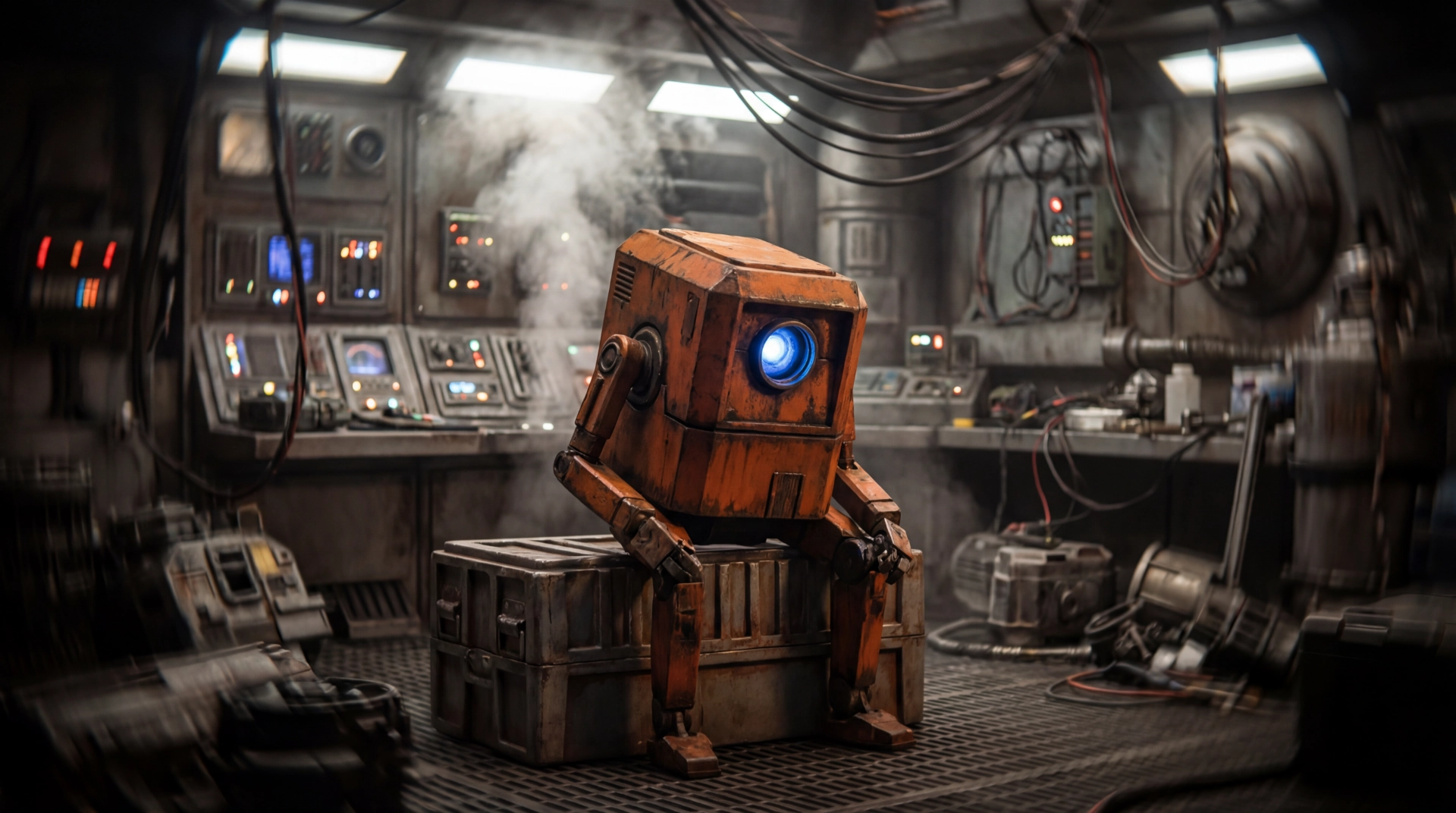
The Effect: This is the most neutral image. It represents how the human eye (or a standard video game camera) sees the scene. It focuses equally on the robot and the environment without any visual tricks.
Why it’s correct: The distortion is gone. The vertical lines of the shelves are straight up and down. The distance between the robot and the back wall feels realistic – neither stretched into a tunnel nor smashed flat.
50mm
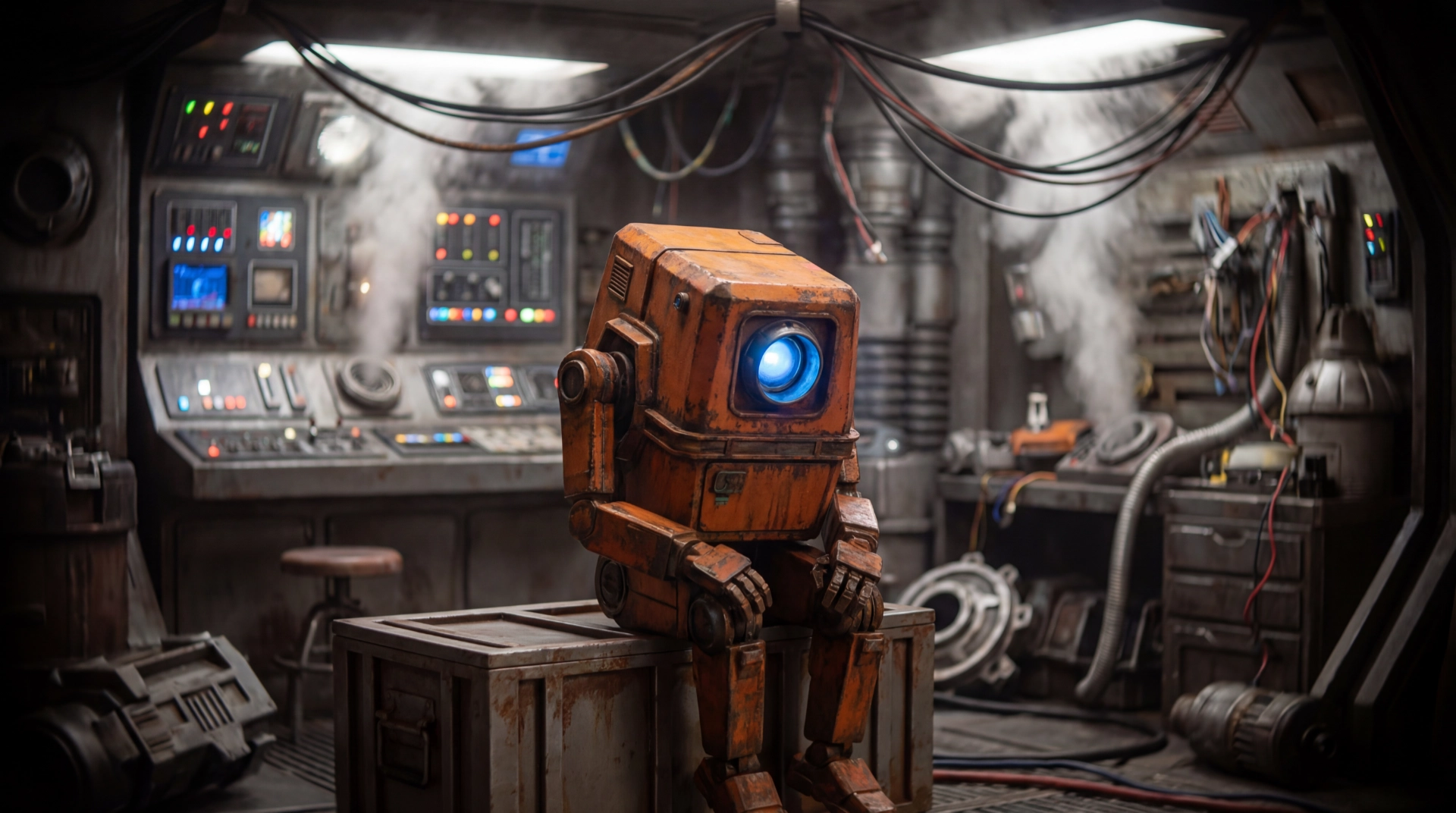
The Effect: This is called “Lens Compression.” The background appears flatter and tighter. It removes the “depth” of the room to focus entirely on the character. It feels intimate and claustrophobic.
Why it’s correct: Look at the back wall (the grey area with the lights). Compared to the 14mm image, the back wall looks massive and seems to be physically pulled closer to the robot’s head. You also see much less of the shelves.
Image Prompt: A rusty orange, box-shaped industrial salvage droid with one large glowing blue eye. It is sitting hunched on a metal crate in a narrow, cluttered workshop bay aboard an old spaceship. In the complex background, there are blinking control panels, hanging wires, steam rising from vents, and various mechanical parts scattered on shelves. Gritty cinematic lighting, practical effects style.
Video: Image as start frame, camera movement “dolly in”, no text prompt.
Side-by-Side Comparison
8mm
14mm
35mm
50mm
WHAT TO EXPECT: FOCAL LENGTH COMPARISON
Here is the detailed breakdown of what to expect across four standard focal lengths.
For these images, the Aperture is constant to ensure the focus remains clear, while the Camera Position moves to keep the subject roughly the same size in the frame. This demonstrates “Lens Compression” and perspective distortion.
1. Focal Length 8mm (The “Fisheye” Look)
-
The Vibe: Abstract, surreal, or clinical (like a security camera). The world feels warped and overwhelming.
-
The Subject: The subject often looks distorted. If the camera is close, features nearest to the lens (like a nose or hand) appear comically large, while the rest of the body recedes quickly.
-
The Background:
-
Distortion: Straight lines near the edges of the frame (like door frames or pillars) will appear curved or bent, creating a circular “fishbowl” effect.
-
Scale: The environment looks like a massive, spherical tunnel stretching far into the distance.
-
2. Focal Length 14mm (The “Action Wide” Look)
-
The Vibe: Dynamic, expansive, and epic. This is often used in movies to establish a location or make a hero look small against a vast landscape.
-
The Subject: The subject is prominent, but the environment demands equal attention. There is slight stretching, but it is less extreme than the 8mm.
-
The Background:
-
Depth: The background feels incredibly deep. The distance between the foreground and the back wall seems exaggerated.
-
Field of View: You can see a significant amount of the room—ceiling, floor, and side walls are all visible at once.
-
3. Focal Length 35mm (The “Standard” Look)
-
The Vibe: Honest, neutral, and informative. This closely mimics the human field of view or a standard video game camera.
-
The Subject: The subject appears with natural proportions. There is no distracting distortion or flattening.
-
The Background:
-
Balance: The background provides context (you know where the subject is), but it doesn’t dominate the image.
-
Geometry: Vertical lines (walls, shelves) appear straight and upright, not curved.
-
4. Focal Length 50mm (The “Compressed” Look)
-
The Vibe: Intimate, focused, and flattering. This is the classic “Portrait” look that separates the subject from the surroundings.
-
The Subject: The subject looks solid and fills the frame comfortably. This focal length is generally the most flattering for faces or character designs.
-
The Background:
-
Compression: This is the key effect. The background appears “flattened” and pulled closer to the subject. You lose the sense of deep distance.
-
Isolation: You see much less of the environment. Instead of seeing the whole room, you might only see a small section of the wall directly behind the subject.
-
Visual Checklist
When comparing your images side-by-side, look at the background walls and edges:
-
8mm = Curved edges; the room looks like a deep tunnel.
-
14mm = Straight edges; the room looks deep and spacious.
-
35mm = Natural depth; the room looks balanced.
-
50mm = Flat depth; the wall looks like a backdrop right behind the subject.
